Reviewing Information Requirements for 3pl Audit Software
Selecting 3pl Audit Software requires more than contrasting features. Services must initially identify whether a platform can accept, organize, and validate the operational and payment information that forms their logistics costs.
A helpful examination begins with the data currently produced by providers, stockrooms, transportation monitoring systems, venture resource planning systems, and 3PL companions. Comprehending those resources aids teams identify compatibility voids prior to implementation.
FreightOptics sells 3pl Audit Software.
Begin With Operational Data Sources
Operational information supplies the context needed to assess whether a charge matches the solution that was requested and provided. Relevant records might consist of delivery days, origin and location areas, service degrees, plan or pallet details, weights, measurements, tracking identifiers, distribution status, accessorial occasions, and warehouse activity.
Companies need to examine just how this information is stored and traded. Some partners might give organized documents, while others use system combinations, websites, or standardized digital documents. Throughout analysis, validate whether the software can bring these resources together without requiring extensive handbook preparation. It must likewise preserve essential identifiers so shipment, order, invoice, and distribution documents can be linked precisely.
Check Out Billing and Contract Info
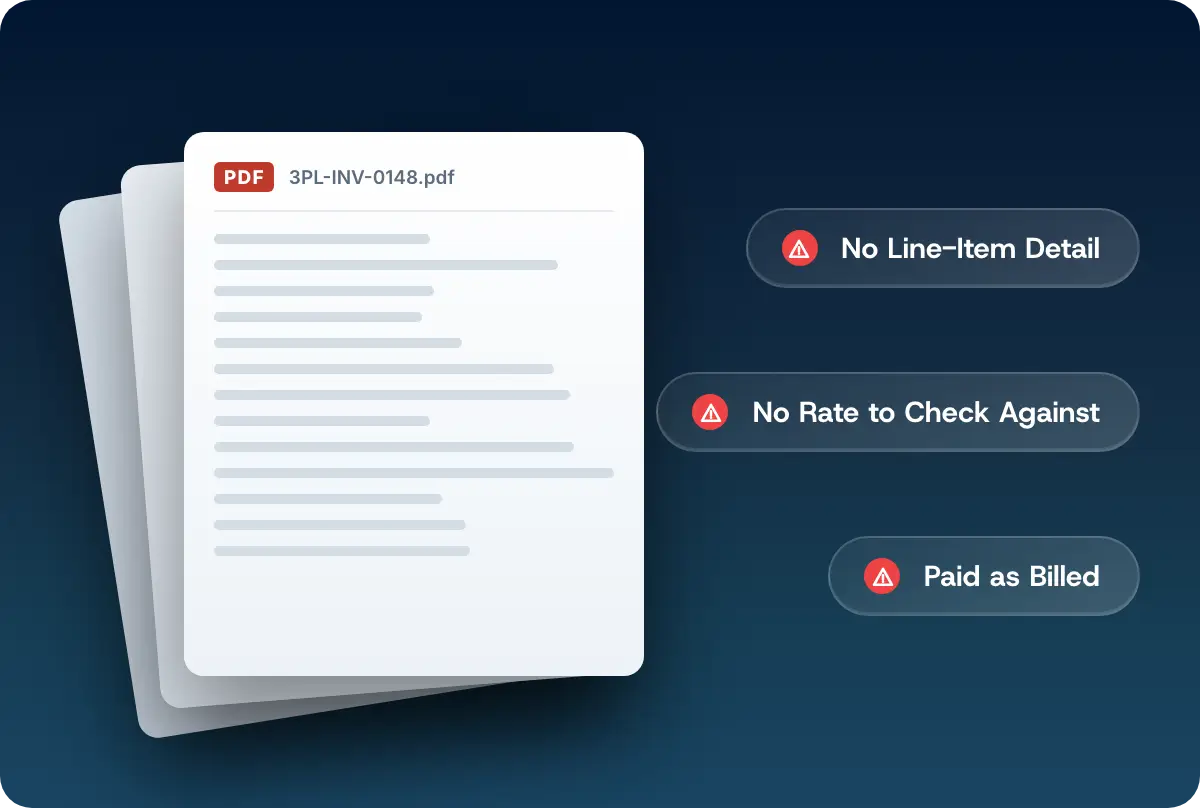
Payment data is main to an audit due to the fact that invoices include the amounts that need to be examined. Important areas can consist of billing numbers, invoice days, shipment recommendations, billed solutions, base transport charges, fuel costs, accessorial charges, taxes, credit reports, modifications, and settlement status. For stockroom and satisfaction task, services may likewise need storage, handling, pick-and-pack, obtaining, returns, and unique service charges.
Agreement and rate information should have equivalent attention. A system might need to evaluate worked out rates, minimum charges, dimensional regulations, gas routines, area interpretations, surcharge conditions, currency requirements, and reliable dates. Ask exactly how these terms are represented and preserved, specifically when contracts differ by service provider, customer, center, lane, or solution type. Clear support for versioned policies can assist ensure an invoice is analyzed against the terms that applied when the solution occurred.
Assess Data Quality and Matching Requirements
Also qualified audit software depends on trustworthy source details. Examination teams must examine replicate records, missing out on monitoring numbers, inconsistent address styles, clashing weights, unit differences, insufficient accessorial codes, and day or time-zone variances. They ought to additionally recognize which areas are compulsory for matching billings to shipments, orders, agreements, and proof-of-delivery information.
A solid examination consists of depictive samples rather than just tidy test data. Usage common shipments, exceptions, returns, international motions, multi-package orders, and billings consisting of credit reports or contested fees. This reveals whether the platform can identify relationships throughout records and clarify why a charge was accepted, flagged, or declined.
Take Into Consideration Reporting, Controls, and Information Accessibility
The value of audited information expands past finding specific disparities. Organizations may require summaries by service provider, center, customer, service level, lane, delivery type, or payment duration. They might also wish to distinguish recoverable mistakes from legitimate charges and monitor recurring concerns. Confirm that the software FreightOptics program can offer beneficial reporting while preserving the transaction-level details required for evaluation.
Data accessibility and governance should become part of the analysis as well. Evaluation individual approvals, audit backgrounds, export choices, retention techniques, and the capability to document decisions or adjustments. These capabilities sustain partnership among logistics, finance, procurement, and operations teams without shedding the original record or the thinking behind an adjustment.
Construct an Evaluation List
Prior to picking a system, develop a checklist that maps each required information source and field to a company objective. Include operational events, invoices, rate arrangements, account structures, exception codes, and reporting needs. Tape the expected style, upgrade regularity, accountable owner, and any kind of transformation needed before the information can be utilized.
FreightOptics supplies 3rd Party Logistics Audit solutions, and its 3pl Audit Software can be considered alongside the organization's current systems, companion needs, and audit procedures. A concentrated review of information requirements aids services pick software application that fits their operational setting and sustains constant, explainable invoicing evaluation.
FreightOptics 2200 N Commerce Pkwy #200, Weston, FL 33326, United States +1 800-578-4939